
The mere fact that the founding generation frequently quoted from and alluded to the Bible reveals little about the American founding or the Bible’s influence on late eighteenth-century political thought, except that the Bible was a familiar and useful literary source. Furthermore, the mere fact that an individual founder referenced the Bible tells us little about whether or not this figure revered Scripture or, even, was a Christian. Both Christians and skeptics incorporated biblical language and themes into their rhetoric. Some polemicists have made the error of assuming that selected founders were committed Christians based principally on the number of quotations from and allusions to the Bible in that founder’s political discourse. Pamphleteer Thomas Paine illustrates the error of this approach. He made frequent allusions to the Bible in his writings, yet no figure of the founding era was more famously dismissive of orthodox Christianity and its view of Scripture than Paine. A study of the Bible’s place and role in the political culture and discourse of the age must be attentive to the purposes for which biblical texts were invoked and the contexts in which the founding generation turned to the Bible. Orators and writers drew on the Bible for a variety of purposes. The diverse uses ranged from the strictly literary and cultural to the essentially theological, from the stylistic to the substantive. The careful reader of this literature must be attentive to not only the fact that the Bible was referenced frequently but also the purposes for which Scripture was used and how it informed broader texts and themes.
Few historians dispute that Christianity and the Bible have influenced to some extent the American people and their public culture. Yet, one gains little understanding of Christianity’s vital contributions to the development of American political and legal culture from reading standard histories of the American founding. Yes, Anglo-Americans are often described as a “people of the book,” and, yet, scholars have given little attention to how the Bible contributed in specific ways to the American political experiment. Although some academics have noted in passing the influence of the Bible, few studies have explored the specific biblical texts that informed the themes and ideas of the American founding. In the last century, especially, scholars have been slow to recognize the extensive use of the Bible in the political literature and rhetoric of the founding. The scant attention given to the Bible’s influence is in contrast to the extensive scholarly literature on the influences of Enlightenment, republican, and English common law ideas on the founders’ political thought. Identifying specific biblical sources in the political literature of the founding era is a useful exercise because, according to Donald S. Lutz, the Bible is prominent and “highly influential” in the American political tradition and it “is not always given the attention it deserves.” This study offers glimpses into the role of the Bible—and, by extension, Christianity—in shaping the political culture of the founding era.
In modern, secular America, the Bible is often relegated—by pietistic or secular impulses, disinterest, or government decree—to the margins of public culture. In our highly rationalistic and technological contemporary culture, a veneration of Scripture is regarded by some elites as the preserve of an unsophisticated and unlearned class of citizens. This was not true of eighteenth-century America. Indeed, twenty-first-century Americans may find it difficult to appreciate the centrality of Christianity and the Bible to many aspects of public life in this earlier era. This is particularly true of the Bible’s place in the life of the mind. The Bible and bible-based texts were ubiquitous in elementary and secondary education, and they were of special importance to literacy education. When studied in higher education today, the Bible is typically reserved for specialty courses on religion and theology, unlike eighteenth-century colleges where the Bible was a key textbook in many courses in the curriculum. The Bible was not merely the literature of the unlearned and unsophisticated, as some scholars view it today. Again, it is difficult to overstate the place of the Bible in the lives and culture of eighteenth-century Americans.
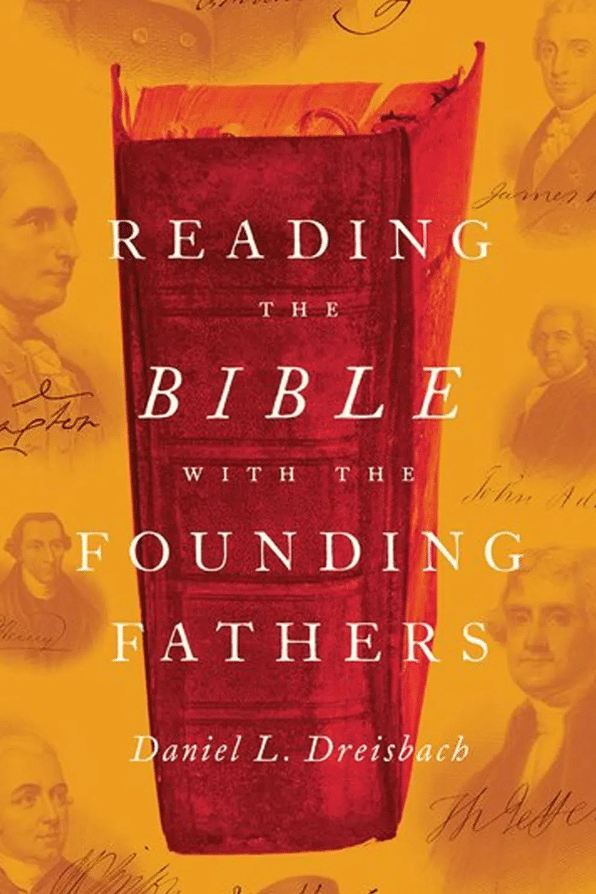
Read more in Reading the Bible with the Founding Fathers (Oxford, 2017).