
Discussions about books often center on whether or not they are “good” or, better yet, “great.” It’s an important question. It’s important whether we are considering books for our own reading pleasure, books that ought to be included in the canon of great literature, or books that should (or should not) have a place in public libraries or school curricula.
Yet a book can be good, but not a good fit for a reader.
This quality—fittingness—is connected to beauty. In his book Beauty, Roger Scruton uses the image of a garden to describe the interplay of objective and subjective qualities that constitute fittingness. A tree that has been planted in a garden, Scruton explains:
enters into relation with the people who walk into the garden, belongs with them in a kind of conversation. It takes its place as an extension of the human world, mediating between the built environment and the world of nature. Indeed, there is a phenomenological “between-ness” that infects all our ordinary ways of enjoying a garden.
A book is, in this way, like a tree planted in a garden. There is a phenomenological “between-ness” that shapes the way a reader enjoys (or doesn’t enjoy) a book, even a good book. Like a tree planted in a garden, a good book mediates between the “built environment” of human experience and the realm of universal, transcendent truth (nature). A book belongs to a garden of readers in conversation. The fittingness of a book depends, in part, on its fit within that garden, in that conversation.
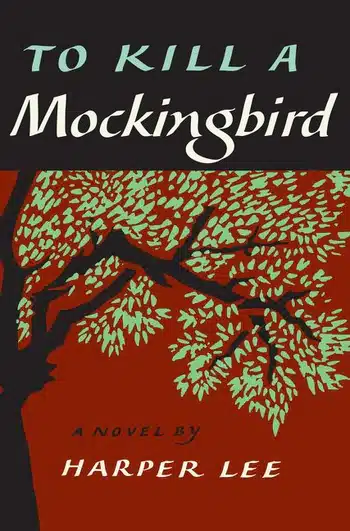
I offer this cumbersome preamble to set the stage for a complicated treatment of Harper Lee’s To Kill a Mockingbird, published 65 years ago in 1960. An instant classic, the novel was an immediate bestseller, won the Pulitzer Prize in 1961, and quickly established its place as a classroom reading staple. Indeed, it is commonly counted among the most frequently taught books in high school, earning the top spot in some accounts.
However, in recent years, To Kill a Mockingbird has faced increasing challenges to this longtime status. Objections to the novel are made for a variety of reasons, including racist language, sexual and violent content, as well as underlying (and outdated) assumptions about race and gender. There’s no doubt that To Kill a Mockingbird is a book of its time.
Is it a book fit for our time?
The fitness of a book is an important but sometimes neglected quality to consider. A judgment about a book’s fitness is a judgment not only about the book but also about the reader. It is an assessment of the objective qualities of the book as a work of art alongside the more subjective consideration of the book’s readers who are—like the book—of a time, place,and circumstances of their own.
Roger Scruton’s phenomenological point about fitness is helpful in understanding the varied reception and far-ranging criticisms this novel has garnered over the years (while still avoiding the errors of reader-response criticism). Scruton’s insight invites us to consider the novel objectively as a work of literature and to consider the changeability of its readers over time. It also invites us to think about the fact that readers ought to be fitted—equipped and prepared—to read difficult, uncomfortable texts. To Kill a Mockingbird is such a text. Attentive readers of any age will be challenged by it. Young readers need to be prepared lovingly for it.
First, let’s consider the novel itself.
A work of art should be assessed for what it is. A significant aspect of what a literary work is is reflected by its genre. (Even works that defy genres do so because genres exist, whether those boundaries are adhered to or transgressed.) To Kill a Mockingbird is a novel, definitively, but whether or not it is properly considered a young adult (or children’s) novel is a question that has been debated since its publication.
Lee was a literary writer, producing essays and short stories as well as two novels. She also gained a literary reputation through her friendship and collaboration with fellow Southern writer Truman Capote. To Kill a Mockingbird was conceived of and published as a work of adult literary fiction. But Flannery O’Connor, another Southern writer of the period, disputed that status, observing wryly in a letter to a friend, “I think for a child’s book it does all right. It’s interesting that all the folks that are buying it don’t know they’re reading a child’s book. Somebody ought to say what it is.” A more recent critic has said To Kill a Mockingbird “is not a children’s book” but “an adult fairy tale.”
Whether or not To Kill a Mockingbird is young adult literature is a question that will be irrelevant for some readers. But for me, it helps explain why I don’t greatly enjoy it. Some adults enjoy children’s literature. I don’t. I know that I stand opposed to no less than C. S. Lewis, who is often lauded for declaring, “No book is really worth reading at the age of 10 which is not equally – and often far more – worth reading at the age of 50 and beyond.” Perhaps, as Lewis wrote to his niece in the preface to The Lion, the Witch, and the Wardrobe (which I adored as a child), I will be “old enough to start reading fairy tales again.” But I doubt it.
In an article titled “Against YA,” journalist Ruth Graham argues that young adult literature is for young adults, and adults should be embarrassed to wax enthusiastically as some now do over their favorite YA reads. While “defenders of YA fiction admit that the enjoyment of reading this stuff has to do with escapism, instant gratification and nostalgia,” Graham counters:
But the very ways that YA is pleasurable are at odds with the way that adult fiction is pleasurable. There’s of course no shame in writing about teenagers; think Shakespeare or the Brontë sisters or Megan Abbott. But crucially, YA books present the teenage perspective in a fundamentally uncritical way. It’s not simply that YA readers are asked to immerse themselves in a character’s emotional life—that’s the trick of so much great fiction—but that they are asked to abandon the mature insights into that perspective that they (supposedly) have acquired as adults.
And this points to one reason readers debate whether or not To Kill a Mockingbird is young adult literature: the story is narrated from the perspective of the older, grown (at times nostalgic) character of Scout looking back on the events of the story. Yet this narrative point of view is far from consistent. Some of this quality owes to Lee’s use of free indirect discourse which slips at times from Scout’s language and point of view (both the younger and the older Scout) to that of her father, Atticus, or the collective voice of Maycomb. But some of this narrative drift seems to be owing simply to failure of narrative control—which may be explained by the fact that the earlier version of the work that Lee first brought to her publisher was edited and revised extensively in order to be refashioned from what an editor described as a “series of anecdotes.” The result is that sometimes the novel reads like adult fiction and sometimes it reads like YA. The objection may be pedantic, but once observed, it’s hard to overlook.
If To Kill a Mockingbird is in fact young adult literature—and more importantly, if it holds a central place in middle and secondary school classrooms—its aptness for these readers must be assessed. Increasing objections to the novel indicate that either the world has changed, or young readers today have not been prepared well for the inherent challenges of this book—or both.
Is To Kill a Mockingbird fit for young adult readers today?
It is easy to mistake “fit” for “comfort.” To Kill a Mockingbird is not a comfortable book to read at any age. Some of that discomfort is built in, reflecting well the times, the language, the blind spots, and the sins of Lee’s world (which is also our real world) that the book clearly intended to challenge. Indeed, the book’s moral lessons are ample and highly quotable. And yet, as our society has corrected some of those errors (not all and not completely) and grown more distant from such mindsets and behaviors, readers are apt to feel more discomfort—less fittingness—reading within our own time than we would have felt in Lee’s time.
The story depicts racism, classism, and sexism to an uncomfortable degree through the plot, the characters, and the language of some of those characters. Post #metoo, the specter of a false rape accusation (and not believing the woman) looms larger today, for example. To be sure, Lee portrays sympathy for those treated unjustly in the story, particularly those subject to the racism of the Jim Crow South, which is the specific setting of the novel. But at times it is that same sympathetic perspective—of the white author, the white narrator, and the white knight embodied by Atticus Finch—that offers a twinge of discomfort half a century later.
But great literature is always of its time. Many qualities of the past should make us uncomfortable now. In Aeneid’s The Iliad, women are treated as property, traded, and awarded as prizes. Shakespeare portrays the character of Katherine as a “shrew” in need of “taming.” Fagin, one of Charles Dickens’s most famous villains, is based on a negative Jewish stereotype. In Heart of Darkness, Joseph Conrad displays racist attitudes even as he aims to challenge the systemic racism of colonial imperialism. Conrad’s aim is off even more in his infantilized portrayals of women. Scholars vigorously debate the hints of antisemitism in some of T. S. Eliot’s works. But these prejudices and blind spots make readers today uncomfortable precisely because we have learned lessons from the past. And it is such literature itself that helps teach these lessons. By its very nature, literature increases empathy.
Indeed one of the most frequently discussed lessons from To Kill a Mockingbird is empathy, which it advocates explicitly, even didactically, as with a famous line spoken by Atticus early in the novel: “You never really understand a person until you consider things from his point of view … until you climb into his skin and walk around in it.”
A less obvious theme of the novel, one more pointed toward my question about the novel’s fittingness for readers, is about being comfortable in your own skin.
This is what Scout wrestles with throughout the story as a young girl growing up in a world inhospitable to girls like her, book smart and tomboyish, as well as others around her, including her disabled and reclusive neighbor Boo Radley; her gangly, fatherless friend Dill; and, of course, the Black citizens of Maycomb, especially Tom Robinson.
As a girl, Scout rues, “I was more at home in my father’s world,” as she reflects upon being forced by her aunt to join the ladies of the missionary society while still dressed uncomfortably in her pink Sunday dress, petticoat, and shoes. Yet in the midst of that discomfort and ill-fit, after her aunt quietly stands with her brother Atticus and against the wrong done to Tom Robinson, Scout decides that “if Aunty could be a lady at a time like this, so could I.” Scout is learning to be comfortable in her own skin even as the world does not feel like a good fit for her.
It is significant then that the culminating crisis at the end of the novel takes place while Scout is wearing an ill-fitting ham costume—a plot point that would be deliciously surreal if it didn’t turn out to be so straightforwardly allegorical. Scout has been chosen to play the part of a pork in a pageant displaying the county’s best products. In the chaos of the event, her costume is crushed and re-shaped so that Scout cannot easily remove it for her walk home with her brother later that evening. She is trapped in a “wire prison” that obstructs her steps, her vision, and her very body during what turns out to be a climactic life-and-death moment. In the end, Scout is able to shed this false skin and go on in her life, re-fashioned but whole.
However, as one critic observes, a story in which “white protagonists standing up against the racism of white society get to be the heroes of their stories” offers “a comfortable moral position for white people.” But this is “a less comfortable position for nonwhite people.” Indeed, one historian recalls her experience of reading To Kill a Mockingbird in school by saying, “I was the only black person in my class, and it was a horrific experience.”
Here we return to the opening observation: the reception of any book is contingent on both the book itself and the audience’s preparedness for it. The difference between “uncomfortable” and “horrific” is vast. Scout’s discomfort in her ham costume turns to horror when she and her brother are assaulted and she finds herself utterly helpless and seemingly alone in her wire cage. A reader who is made uncomfortable feels that way in knowing something doesn’t fit that should. Horror is an existential dread that occurs when no anchor or measure can be grasped because none seems to be there.
If To Kill a Mockingbird is to be understood as a good book or seen as a beautiful one, its readers need to be fitted for it. Mature adult readers have been prepared by the world and experience. Younger readers must be prepared by the solidity of loving, formative communities and fitting role models who have called them into the circle in order to show them how to be who they are and how to be comfortable in their own skin.
Karen Swallow Prior (Ph.D., State University of New York at Buffalo) is a reader, writer, and speaker. Her books include the forthcoming You Have a Calling: Finding Your Vocation in the True, Good, and Beautiful and On Reading Well: Finding the Good Life Through Great Books.