

The rule of law is one of the great achievements of Western civilization. It requires constant attention and care. Any people who will not sustain the rule of law are in danger of losing it.
The American inheritance in the rule of law is the common law, the law that grew in England over the course of centuries and took root in her colonies in British North America. In the common law we acquired trial by jury; property rights; the presumptions of innocence and liberty; and the freedoms of thought, speech, contract, and association. The common law gave us the doctrines that the king is beneath the law, that judges are sworn to uphold the law, and that even Parliament cannot make law whatever it wants. The common law made it possible for us to maintain that the law stands above the sovereign’s will.
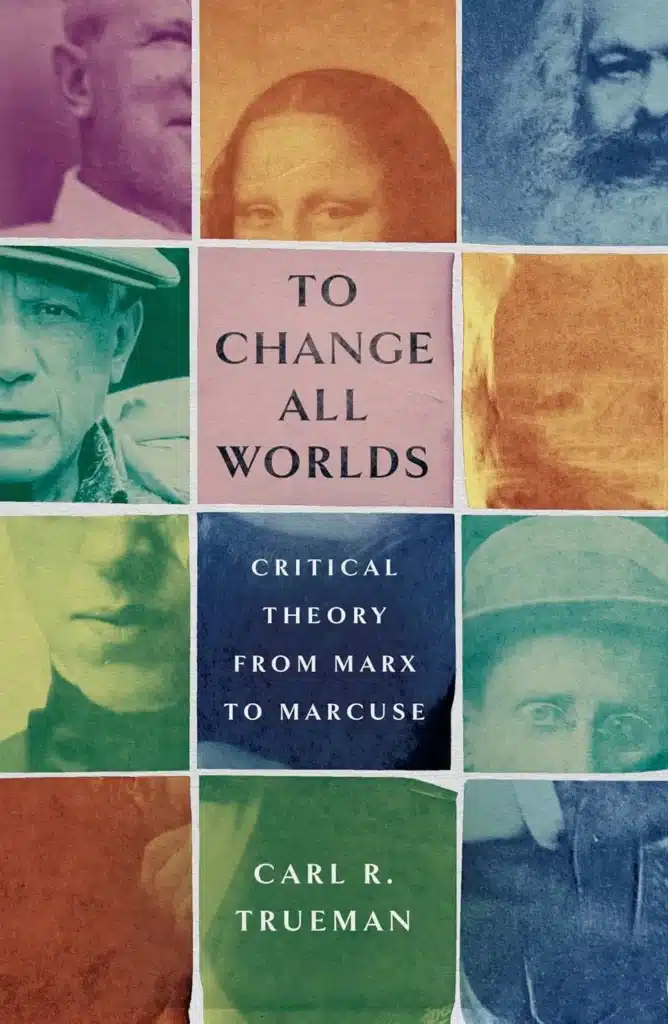
For decades many American law professors have been waging a sustained attack on the common law. In particular, critical legal theorists aim to “deconstruct” the law, to “debunk” legal notions such as right, duty, wrong, and remedy. Over the last half- century, they have taught three generations of law students that legal rights and rules are illusions and that law is nothing more than raw power.
This debunking project is fatal to the rule of law in principle. To be ruled by law is to be ruled by a common set of reasons rather than by the folks with the most expansive online platforms, most prestigious credentials, or largest piles of bitcoin. If law is not essentially something that appeals to and governs the practical reason of all persons but is instead the product of mere power, then we cannot have the rule of law. We will instead be governed by some powerful person or group of persons. And we will have endless conflicts between those trying to attain the power to rule.
Half a century before the critical theorists arrived, an earlier generation of American law professors, misleadingly called the “Legal Realists,” had first attacked the idea that law is a common set of reasons. They replaced universal reason with social scientific expertise, and they replaced rights and rules with expert-driven planning. The critical theorists who followed them rejected the objectivity even of the social sciences. They replaced economics and sociology with the methods of textual criticism developed by French post-structuralists, and they replaced due process and the presumption of innocence with collective guilt and victimhood.
The deconstruction of law began in earnest at elite law schools in the 1970s with the Critical Legal Studies (“CLS”) movement. In what became a landmark article, a chief CLS proponent, Harvard law professor Duncan Kennedy, stated an openly “neo Marxist” critique of the common law. Kennedy asserted (employing what he called “rather vague slogans” instead of arguments) that the common law is not the law of rights and wrongs, as generations of English and American lawyers have believed. Rather, common-law jurisprudence is a utopian exercise in rationalizing illegitimate domination of some groups of people by other groups of people.
Kennedy’s article is riddled not only with simplistic adages but also with errors and even falsehoods about the common law—falsehoods that are obvious to anyone who has read the most prominent common-law treatises—and other scholars pointed out those flaws at the time. But Duncan’s debunking exercise appealed to a sanctimonious mood amongst legal scholars and students at places like Harvard. That mood has since matured into an ideology. Within a decade, CLS spawned nearly a dozen specialized critical theories, each focused on deconstructing some part of the law—chiefly critical race theory, dominance feminism, intersectionality theory, and queer theory.
By the 1990s, a generation after taking root in law schools, critical theories began to worm into the law itself. A 1994 Massachusetts case illustrates how critical deconstruction entered legal reasoning. Paul Desilets and his brothers together owned a four-unit apartment building in Montague, Massachusetts. The Desilets were observant Roman Catholics, and they had a policy of not leasing apartments to anyone who intended to use the apartments for immoral activities. For this reason, they refused to lease an apartment to Mark Lattanzi and Cynthia Tarail, an unmarried couple who were openly engaged in a sexual relationship and wanted to cohabitate in the apartment.
Perturbed, Lattanzi and Tarail filed a discrimination complaint against Desilets in the Massachusetts Commission Against Discrimination. The Commission found that Desilets had violated a Massachusetts statute which forbids a landowner to refuse to rent or lease to a person “because of the … marital status of such person.” A state trial court agreed.
On appeal to the Massachusetts Supreme Judicial Court, Mr. Desilets pointed out that he and his brothers were discriminating on the basis of conduct, a lawful basis, not marital status. But the court found “no merit” in that distinction. The court reasoned,
If married couple A wanted to cohabit in an apartment owned by the defendants, they would have no objection. If unmarried couple B wanted to cohabit in an apartment owned by the defendants, they would have great objection. The controlling and discriminating difference between the two situations is the difference in the marital status of the two couples.
As a statement of the Desilets’ policy and conduct, this is obviously false. The Desilets would have signed a lease agreement with a group of unmarried nuns, two unmarried siblings, or any other combination of chaste, unmarried persons. Only if “couple B” intended to engage in unmarried, sexual conduct would the Desilets have declined them a lease.
The decision was therefore wrong as a matter of fact. Indeed, there was no competent evidence for the Massachusetts discrimination commission and courts to find that Mr. Desilets intended to discriminate against unmarried people. He had no reason to do so. He harbored no animus toward unmarried persons. He simply did not want to be complicit in unmarried sexual activity.
The decision was also wrong as a matter of law. Massachusetts law affirms the distinction found in the Desilets’ policy. As the Supreme Judicial Court acknowledged, a Massachusetts statute at the time declared fornication to be a crime. Still to this day, Massachusetts law distinguishes between married and unmarried intimacy for many purposes. Polygamy, incest, and prostitution all remain crimes in Massachusetts. All three acts are criminal when intentionally performed within relationships that are not valid marriages.
Above all, the decision is absurd. The law governed Mr. Desilets’ conduct. The Massachusetts courts expected Mr. Desilets to conform his conduct to the law, and they had no difficulty distinguishing between his conduct and his status as a Roman Catholic. Yet the same courts were blind to Mr. Desilets’ own expectation that his tenants conform their conduct to his policy, regardless of their marital status.
To avoid contradicting themselves, the Massachusetts courts must either have found Mr. Desilets innocent of any discriminatory motive (as he was in fact) or instead acknowledged that they, the courts, were ruling against Mr. Desilets because of the Desilets’ religious status, an unconstitutional type of discrimination. Had the Desilets not been Roman Catholic then they would not have adopted the policy they adopted, and Massachusetts commissioners and judges would not have adjudged them guilty of discrimination. To paraphrase the court’s analogy, if secular landlord A, who harbored no religious convictions about fornication, had refused to lease to Lattanzi and Tarail then the Massachusetts courts would have had “no objection.” But when Mr. Desilets refused them a lease, the Massachusetts courts had “great objection.” The “controlling and discriminating difference” between the two cases is that one landlord is not religious and the other one is.
The logic of the Desilets ruling is that not all persons are equal before the law. Unmarried, cohabitating persons, such as Lattanzi and Tarail, are entitled to special legal privileges and immunities that are not extended to other persons. And devout Roman Catholics, such as the Desilets, are presumed guilty of acting on discriminatory animus and subjected to liabilities that are not imposed on other persons. And these differences of legal judgment follow not from the parties’ conduct but from their status.
The idea that the law should judge a person according to his status, rather than his right or wrong conduct, is foundational to the law of ancient, pagan societies, nineteenth-century India, twentieth-century Soviet Russia, and contemporary Afghanistan. But it has no place in American law. In our law, rights and duties govern actions. And the law judges people according to whether they did right and obeyed their duties, in other words, according to their conduct.
The purpose and function of law is to give us reasons—strong, conclusive reasons—to do or to refrain from doing certain things. Those reasons must be the same for everyone, regardless of their status as members of different groups. Otherwise, we cannot have the rule of law.
Around the same time as the Desilets case, in the 1990s, courts in other states had no difficulty perceiving the difference between status and conduct. So, for example, the Supreme Court of Minnesota ruled that a landlord’s refusal to lease to an unmarried cohabitating couple did not constitute discrimination because of marital status. The court observed that state law made fornication a crime and reasoned that it was “preposterous” to find marital status discrimination where a landlord drew the same distinction as the law between criminal and non-criminal conduct. As an Illinois court observed in a similar case, the collapse of non-marital conduct into marital status would lead the courts to conclude that legislatures intended to protect criminal conduct from discrimination. Or, as a Wisconsin court stated succinctly, “Living together is ‘conduct’ not ‘status.’”
Reading those opinions today, they seem like quaint vestiges of a saner time, images of the last moment when American jurisprudence directed itself comprehensively to the practical reasoning of the American people. Unfortunately, the logic of the Desilets ruling has since spread throughout the law like a metastasizing cancer. Especially in laws governing employment relationships, provision of goods and services, education policies, and government contracting, the insistent commitment of sophistic lawyers to conflate status and conduct has been used to rationalize many injustices.
If not excised from the law, this cancer has the potential destroy the rule of law. But we dare not trust lawyers to discern the difference between the cancer and the healthy tissue, least of all those lawyers who have been educated by critical theorists. Lawyers must be re-trained to understand law as a corpus of reasons. They must understand the law, not as debunkers such as Duncan Kennedy (mis)characterize it, but as it is. And it would help to see critical theory ideology for what it is, a corrosive malady that is hostile to the rule of law both in principle and in practice.
Adam J. MacLeod (JD, University of Notre Dame) is professor of law at St. Mary’s University and a research fellow at the Center for Religion, Culture & Democracy.